
Jump to Section
1. The Business Case: Scaling ≠ Hiring
Why Linear Scaling Breaks Down:
- • Diminishing Returns: Each new SDR targets the same shrinking pool of engaged prospects
- • Ramp Cost: 3-4 months before a new hire produces at capacity
- • Quality Decay: Volume pressure forces reps to sacrifice personalization
- • Management Tax: Every 5 SDRs requires a team lead, adding cost without output
- • Turnover Churn: Average SDR tenure is 14 months — constant recruiting overhead
Where SDR Time Actually Goes:
- • 30% — List building and data enrichment
- • 25% — Email writing and personalization
- • 15% — Follow-up sequence management
- • 10% — CRM data entry and hygiene
- • 20% — Actual prospect conversations
SDR time allocation reveals the inefficiency: 80% of activity — list building, email writing, CRM entry — is execution work that AI systems handle at 100x the speed and with higher consistency. The remaining 20% — prospect conversations — is the only activity that justifies human involvement.
2. Unit Economics: The Math That Ends the Debate
| Metric | 5-SDR Team | AI-Augmented (1 AE) |
|---|---|---|
| Annual Cost | $500,000+ | $120K–$180K |
| Leads Researched/Day | 200 (40 each) | 4,000+ |
| Outbound Emails/Month | 10,000 | 30,000+ |
| Personalization Quality | Template-based | AI-custom per prospect |
| Ramp Time | 3-4 months per rep | 2-3 weeks for stack |
| Reply Rate | 2-5% | 8-15% |
| Qualified Meetings/Mo | 40 | 40+ |
| Cost per Meeting | $729 | $312 |
| When Rep Leaves | Pipeline walks out | System keeps running |
3. The Efficiency Stack: Clay + Apollo + Instantly
Apollo — Data Sourcing & ICP Targeting
Apollo builds your target list with firmographic and technographic filters: revenue, headcount, tech stack, funding stage. It's the top of the funnel — the raw signal.
Clay — Waterfall Enrichment
Clay pulls from 50+ data providers simultaneously to build 360° prospect profiles: verified contacts, tech stack, funding history, hiring velocity, and intent signals. What took an SDR 30 minutes per lead happens in seconds.
Instantly — Scalable Deliverability
Instantly manages multi-inbox rotation, warm-up, and domain reputation across 10,000+ sends per month. Your messages land in primary inboxes, not spam folders.
AI Personalization — Custom at Scale
AI reads each prospect's LinkedIn activity, recent company news, and job postings to craft opening lines that feel hand-written. 2-3x higher reply rates vs. template outreach.
"The best SDR in the world can research 40 leads a day. Clay enriches 4,000. That's not a margin improvement — that's a category shift."
4. The Automated Outbound Loop
The modular outbound loop runs continuously without human intervention at each step:
Data Sourcing
Apollo
Waterfall Enrichment
Clay (50+ sources)
AI Personalization
Custom per prospect
Multi-Inbox Delivery
Instantly
Reply → AE Calendar
Human closes
5. The Hybrid Model: AI Opens, Humans Close
AI Handles
- • Lead research & enrichment
- • Multi-channel sequence execution
- • Personalized opening lines
- • Follow-up cadence management
- • Data hygiene & CRM updates
- • Intent signal monitoring
Humans Handle
- • Discovery conversations
- • Complex objection handling
- • Relationship building
- • Strategic deal navigation
- • Multi-stakeholder alignment
- • Contract negotiation
Your humans spend 100% of their time on activities that require human judgment — reading a room, building trust, navigating politics. Everything else is automated infrastructure.
6. Implementation Roadmap
Phase 1: Foundation (Weeks 1-2)
- • Define ICP with specific firmographic filters
- • Document current sequences and top-performing templates
- • Deploy Apollo + Clay + Instantly stack
Phase 2: Pilot (Weeks 3-6)
- • Run AI-generated sequences in parallel with human sequences
- • A/B test AI personalization against human-written copy
- • Measure meeting quality and conversion rates
Phase 3: Scale (Weeks 7-12)
- • Shift SDR role to "AI Operations" managing automated workflows
- • Expand AI sequences to full prospect volume
- • Reallocate budget from headcount to technology
The Bottom Line
The SDR army model isn't "wrong" — it's outdated. In 2026, with real-time intent data, AI enrichment, and deliverability science, the companies that keep hiring linearly are subsidizing their competitors' efficiency gains.
The question isn't "How many SDRs do we need?" It's "What system would make every rep 10x more productive?"
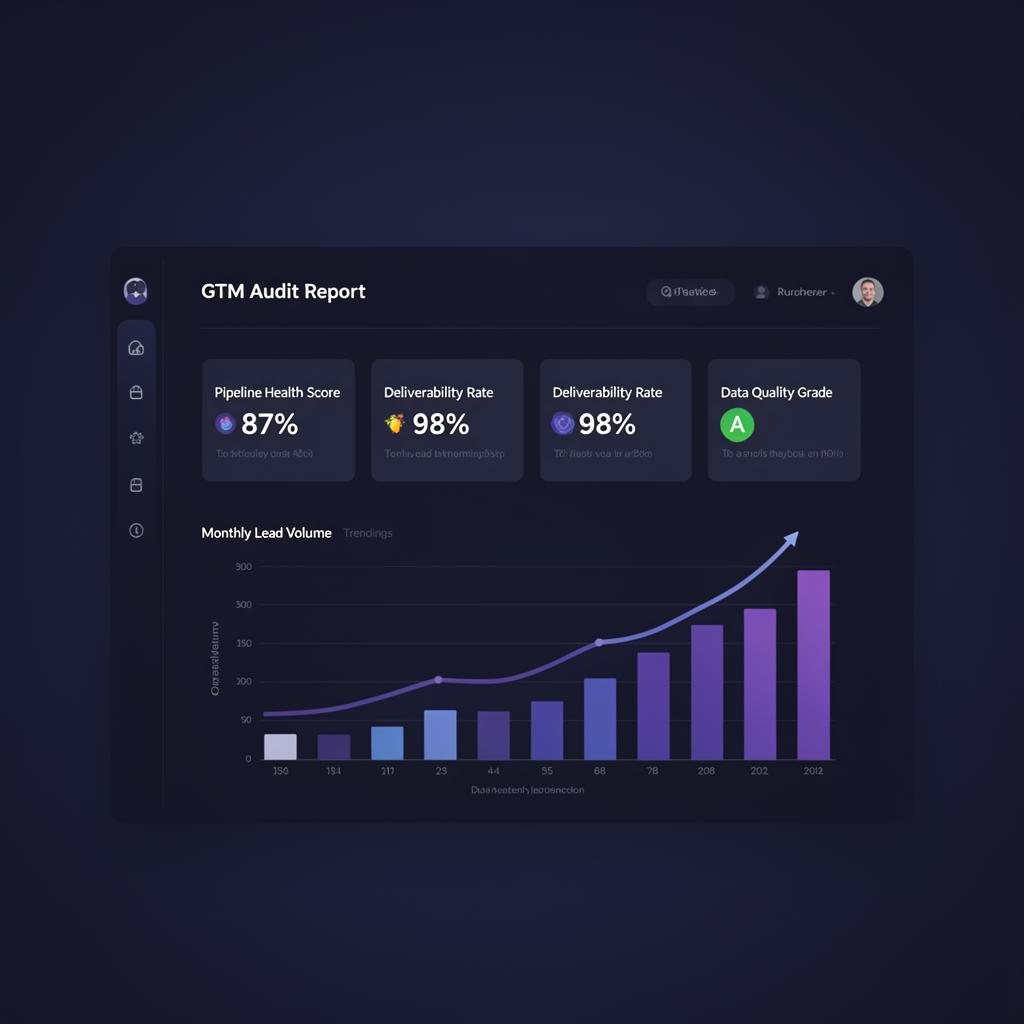
Start with a GTM audit to identify where your current process is bleeding efficiency. Most companies discover that 80% of their SDR activity is automatable.
Amplify. Automate. Accelerate.
We'll audit your current data sources, design a custom waterfall workflow in Clay, configure AI personalization, and have verified leads flowing into your CRM within 10 days — all managed by our fractional execution team.
Frequently Asked Questions
Common questions about this topic
Related Insights
The AI SDR Master Guide
Automation, ROI, and handoff logic for AI-native sales development.
The $300k CRO Trap
Why mid-market SaaS is ditching the $300k CRO for fractional GTM systems.
The Waterfall Enrichment Blueprint
Generate 500+ verified leads weekly with multi-source data enrichment.
Escaping the Founder-Led Sales Trap
The 3-step framework to escape founder-led sales and build scalable GTM.