Jump to Section
Key Takeaways
- •High-friction enterprise deals kill velocity—land with a low-friction Trojan Horse entry instead
- •AI-powered Signal Detection triggers expansion the moment a client is ready, not months later
- •Cross-Departmental Mapping turns one department win into an organization-wide partnership
- •Net Revenue Retention (NRR) of 120%+ separates 10% growers from 500% scalers
In the 2026 SaaS landscape, customer acquisition costs are climbing while expansion revenue remains the most underleveraged growth lever. Most B2B firms lose 40% of potential lifetime value because they treat expansion as reactive customer success rather than a proactive revenue engine.
Having scaled multiple companies—including MobileCause to $15M ARR with 110 employees—the difference between linear growth and exponential scale comes down to one thing: how systematically you operationalize expansion.
1. The Trojan Horse Entry (Land)
Stop selling the entire enterprise platform on day one. High-friction deals create 6–12 month sales cycles that drain runway and exhaust the team.
The Framework
Land with a high-utility, low-friction entry point that solves a specific departmental bottleneck. Once value is proven, the internal viral loop begins. Design the initial offer so success naturally creates demand in adjacent departments.
Slack's early growth: teams adopted it for a single channel, departments caught on, and soon the CTO was negotiating an enterprise deal. Your Land needs the same gravitational pull.
Result: 3x shorter sales cycles and a built-in expansion path from day one.
2. Signal Detection (The AI Edge)
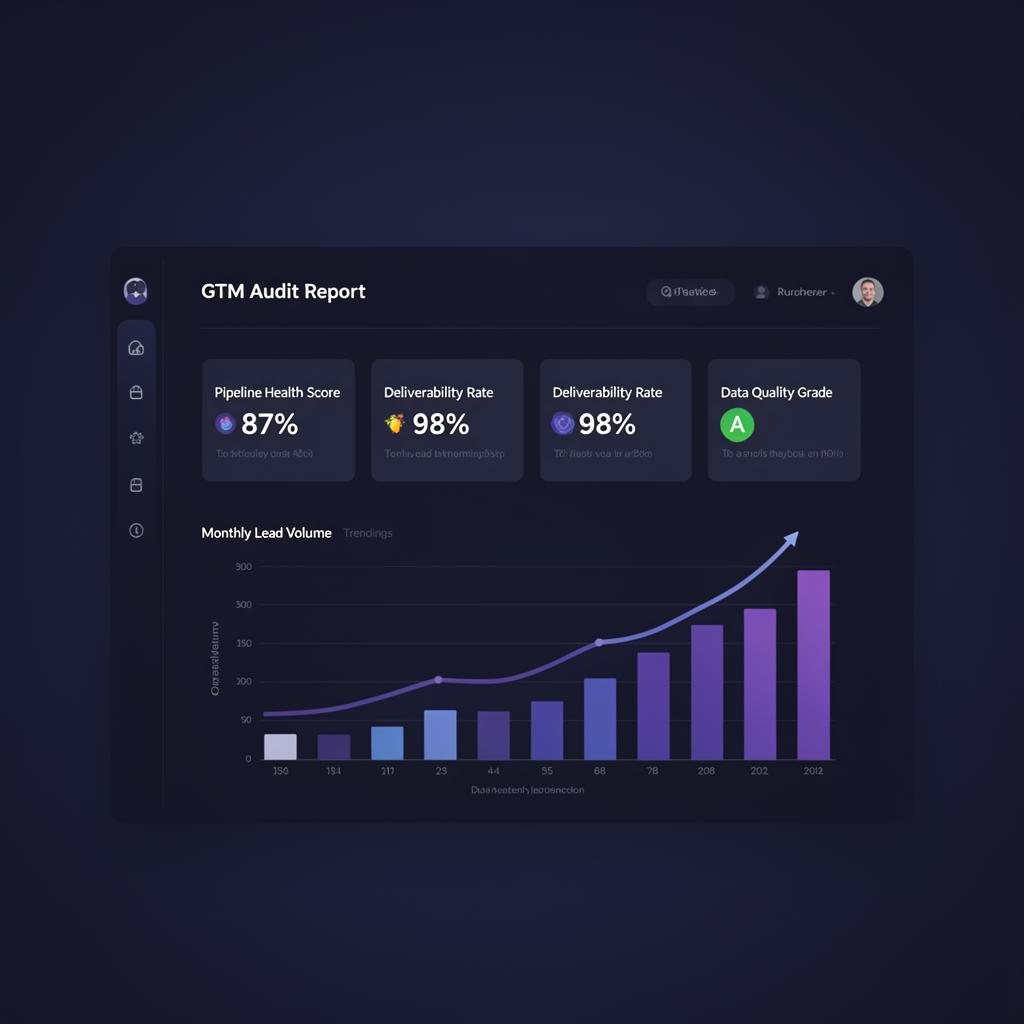
Expansion shouldn't fire because a contract is up for renewal. It should fire because the system detected the exact moment a client is ready for more value.
The AI Advantage
Monitor Expansion Triggers—usage spikes in specific features, cross-departmental logins, data volume thresholds, and engagement pattern shifts. Reach out the moment a client is ready, not months later.
Instead of a CSM guessing during a QBR, the system surfaces a prioritized list of accounts with the highest expansion probability and recommends the specific module to pitch.
Result: 3x faster expansion cycles with hyper-personalized timing that feels consultative, not pushy.
3. Cross-Departmental Mapping
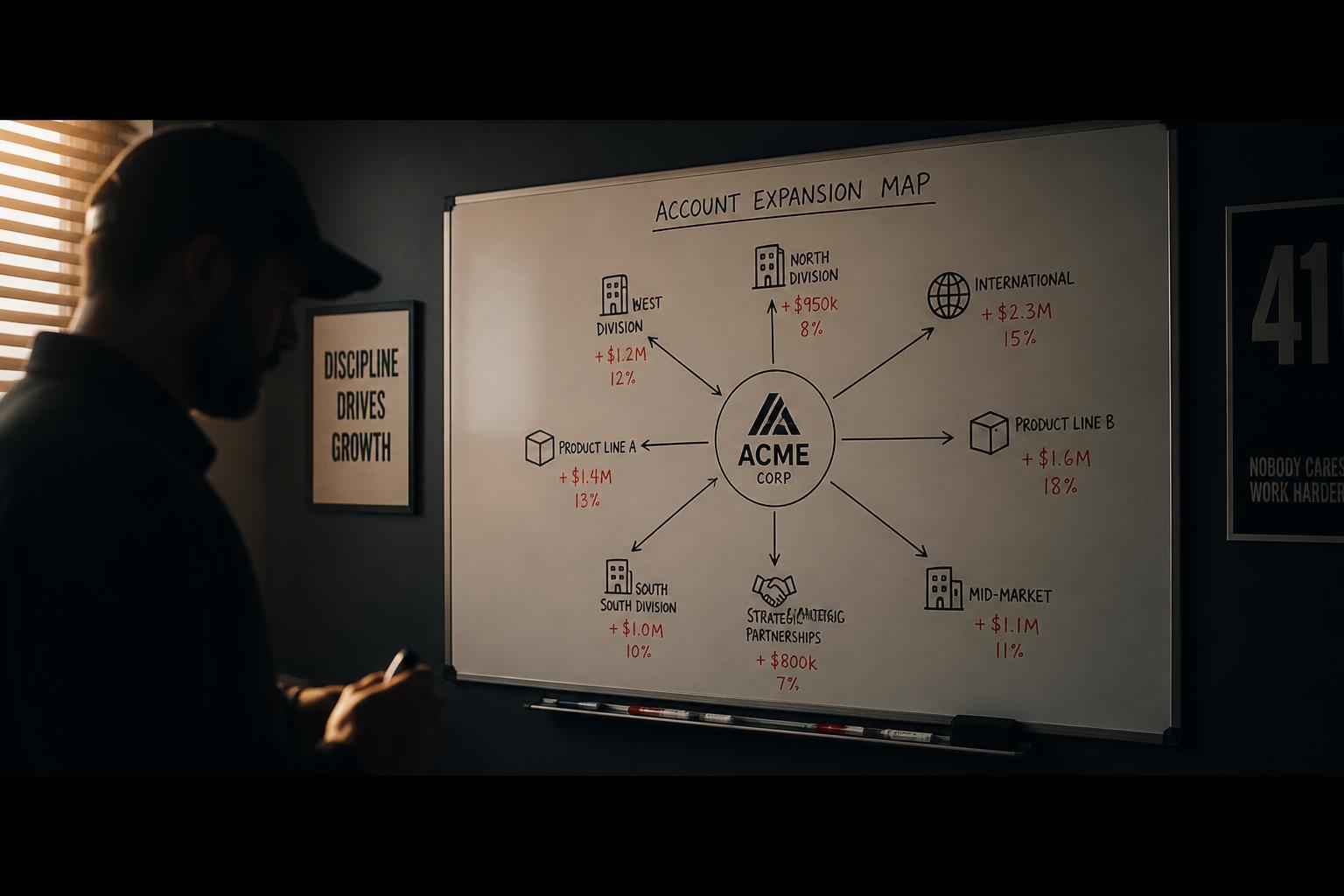
In a true Land & Expand model, the Land in Marketing is a bridge to Expand into Sales, then Operations, then Finance. Most companies leave this to chance.
The Value Path
Mapping the Value Path between departments builds growth into the client's organizational structure. Each department sees a clear, quantifiable reason to adopt—and product architecture makes cross-departmental handoffs seamless.
At MobileCause, deals that grew 10x always followed a pattern: a champion in one department created internal case studies the next department could immediately validate. Engineer that path deliberately rather than hope it happens.
Result: Multi-department penetration that turns single-threaded deals into organization-wide partnerships.
The Bottom Line: Sell a Scaling Partnership, Not Software
The difference between 10% growth and 500% scale is the ability to operationalize expansion. When you stop selling software and start selling a scaling partnership, Land & Expand becomes your most powerful competitive advantage.
The companies that win in 2026 won't be the ones acquiring the most logos—they'll be the ones expanding the deepest.
Amplify. Automate. Accelerate.
We'll audit your current data sources, design a custom waterfall workflow in Clay, configure AI personalization, and have verified leads flowing into your CRM within 10 days — all managed by our fractional execution team.
Frequently Asked Questions
Common questions about this topic
Read the foundational pillars
The deeper reference guides this article builds on.
GTM Automation Tools 2026
The 4-pillar stack we deploy for B2B SaaS scaling to $10M ARR.
Read the pillarHubSpot vs Salesforce
CRM choice by funding stage and the migration tax if you pick wrong.
Read the pillarFractional RevOps vs. Full-Time
Advisory partner, fractional operator, or $300K CRO — when each fits.
Read the pillar