
Jump to Section
1. Why Gut Feel Kills Startups
A study of 500+ B2B sales organizations found that 72% of leaders miss their forecasts by more than 10%. The root cause isn't bad salespeople—it's invisible pipeline health.
The Hidden Killers of Forecast Accuracy:
- • Zombie deals: Opportunities that look alive but haven't moved in weeks
- • Optimistic staging: Reps push deals forward without objective criteria
- • Missing pipeline coverage: Not enough deals to hit quota even with 100% close rate
- • Late-stage concentration: Too many deals competing for end-of-quarter decisions
- • Invisible churn risk: LTV assumptions that ignore actual retention data
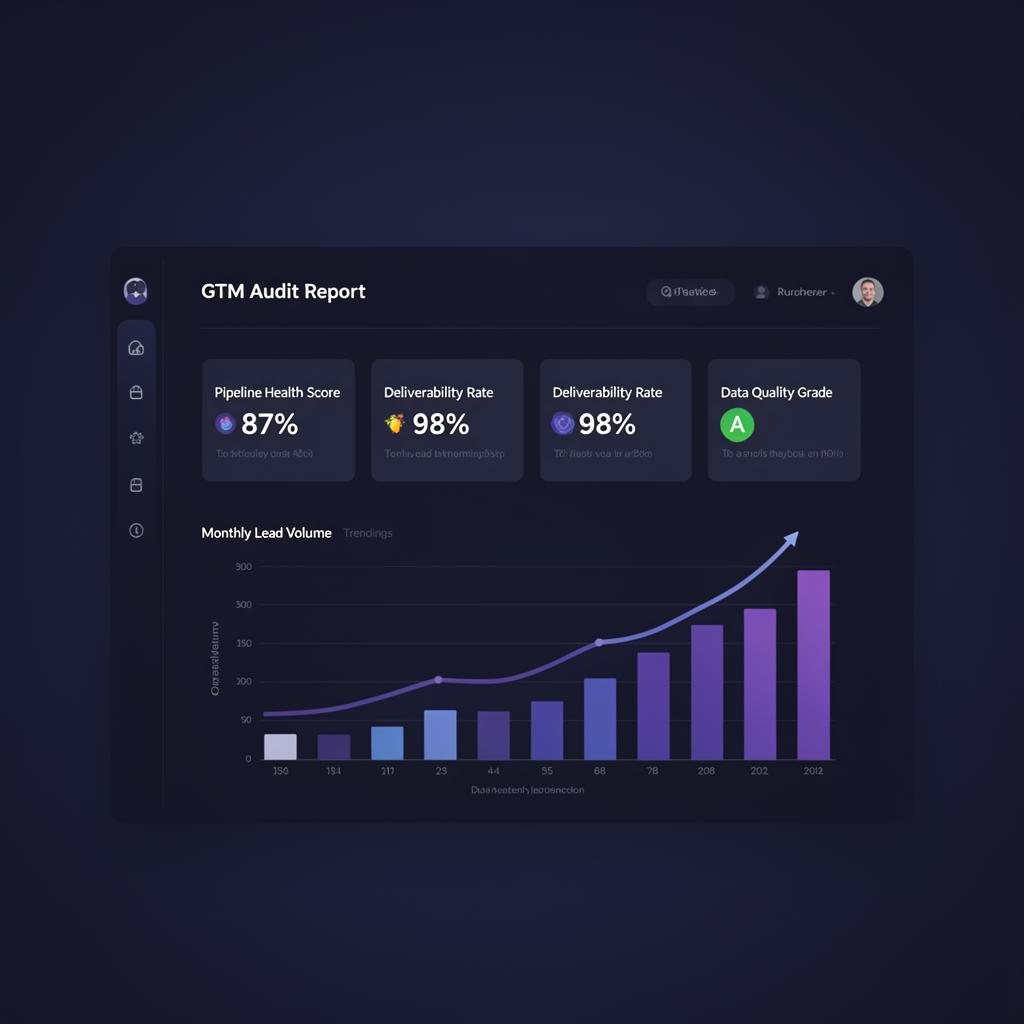
Real-time dashboards transform invisible pipeline dynamics into actionable signals — surfacing zombie deals, staging inflation, and coverage gaps before they materialize as missed forecasts.
2. Time-in-Stage: Your Early Warning System
Time-in-Stage remains the most underutilized metric in sales operations — it measures how long deals spend in each pipeline stage, revealing bottlenecks that conversion rate analysis alone cannot surface. Deals exceeding 2x average Time-in-Stage are 50% less likely to close, making this metric the most reliable early warning system for pipeline health.
How to Use Time-in-Stage:
- • Calculate averages: Track average days in each stage for won deals
- • Set alerts: Flag deals exceeding 1.5x average Time-in-Stage
- • Identify bottlenecks: Stages with high average time need process intervention
- • Predict close probability: Deals 2x over average are 50% less likely to close
- • Segment by deal size: Enterprise deals have different velocity than SMB
Sample Time-in-Stage Benchmarks (Mid-Market SaaS):
- • Discovery → Demo: 7 days
- • Demo → Proposal: 14 days
- • Proposal → Negotiation: 10 days
- • Negotiation → Closed Won: 21 days
- • Total Sales Cycle: 52 days average
When a deal exceeds average Time-in-Stage, it triggers a coaching conversation—not a status meeting.
3. LTV/CAC Dashboard Design
Revenue growth without corresponding unit economics discipline is the most common startup failure mode — growing into bankruptcy. LTV/CAC tracking exposes this dynamic in real-time, preventing the capital destruction that occurs when acquisition costs exceed customer lifetime value.
Key Metrics to Track in Real-Time:
- • CAC (Customer Acquisition Cost): Total sales & marketing spend ÷ new customers
- • LTV (Lifetime Value): Average revenue per customer × average customer lifespan
- • LTV/CAC Ratio: Target 3:1 minimum; below 3:1 is unsustainable
- • CAC Payback Period: Months to recover acquisition cost; target <12 months
- • Gross Margin %: Must factor into LTV calculation for accuracy
⚠️ Warning Signs to Automate Alerts For:
- • LTV/CAC falls below 3:1
- • CAC payback exceeds 18 months
- • Monthly churn rate exceeds 2%
- • Pipeline coverage drops below 3x
LTV/CAC segmentation by customer type and acquisition channel is the minimum visibility threshold — without it, aggregate metrics mask structural inefficiencies that compound over time.
4. Building Your Automated Dashboard
The architectural objective is a single source of truth that updates automatically — eliminating the manual spreadsheet reconciliation that consumes 5-10 hours per week in under-automated revenue operations.
Tech Stack Options by Budget:
- • Budget ($0-500/mo): Google Sheets + Supermetrics + CRM native reports
- • Mid-Market ($500-2K/mo): Looker Studio + Fivetran + Snowflake
- • Enterprise ($2K+/mo): Tableau/Looker + dbt + data warehouse
Dashboard Views by Role:
- • Rep View: My pipeline, activities, quota attainment, Time-in-Stage alerts
- • Manager View: Team pipeline, rep performance, forecast accuracy, coaching priorities
- • Executive View: Revenue forecast, pipeline coverage, LTV/CAC trends, segment performance
Start simple. A well-maintained Google Sheet beats a neglected enterprise BI tool every time.
The Bottom Line
Pipeline visibility isn't a nice-to-have—it's the difference between controlled growth and chaos. Real-time dashboards that track Time-in-Stage, LTV/CAC, and pipeline coverage transform reactive fire-fighting into proactive revenue management. The best operators don't wait for monthly reports; they course-correct weekly based on leading indicators.
Amplify. Automate. Accelerate.
Amplify. Automate. Accelerate.
We'll audit your current data sources, design a custom waterfall workflow in Clay, configure AI personalization, and have verified leads flowing into your CRM within 10 days — all managed by our fractional execution team.
Frequently Asked Questions
Common questions about this topic
Read the foundational pillars
The deeper reference guides this article builds on.
GTM Automation Tools 2026
The 4-pillar stack we deploy for B2B SaaS scaling to $10M ARR.
Read the pillarHubSpot vs Salesforce
CRM choice by funding stage and the migration tax if you pick wrong.
Read the pillarFractional RevOps vs. Full-Time
Advisory partner, fractional operator, or $300K CRO — when each fits.
Read the pillar