Jump to Section
1. The Full-Time Executive vs. Fractional Architect vs. Growth Agency
Traditional RevOps hiring conflates a personnel decision with a systems problem. The requirement is not another headcount — it is a revenue infrastructure deployed by operators who have built and validated it across dozens of engagements, compressing deployment from quarters into weeks.
| Dimension | Full-Time Executive | Fractional Architect | Growth Agency |
|---|---|---|---|
| Annual Cost | $277K – $700K+ | $60K – $120K | $120K – $300K |
| Time to Value | 3–6 months (ramp) | Day 1 (proven engine) | 2–4 weeks (campaigns) |
| What Gets Built | Strategy deck + hiring plan | Automated revenue engine | Campaign outputs |
| When They Leave | Strategy walks out | Systems keep running | Campaigns stop |
| Expertise Level | Single-company deep dive | Cross-industry (30+ deployments) | Junior account managers |
| Infrastructure | Built from scratch | Pre-built SaaP stack | None (execution only) |
| Risk | High (bad hire = 2-3x cost) | Low (month-to-month) | Medium (dependency) |
What Our SaaP RevOps Stack Includes:
CRM Architecture
Pipeline stages, lifecycle definitions, and deal routing logic
Attribution Models
Multi-touch attribution tied to revenue, not vanity metrics
Waterfall Enrichment
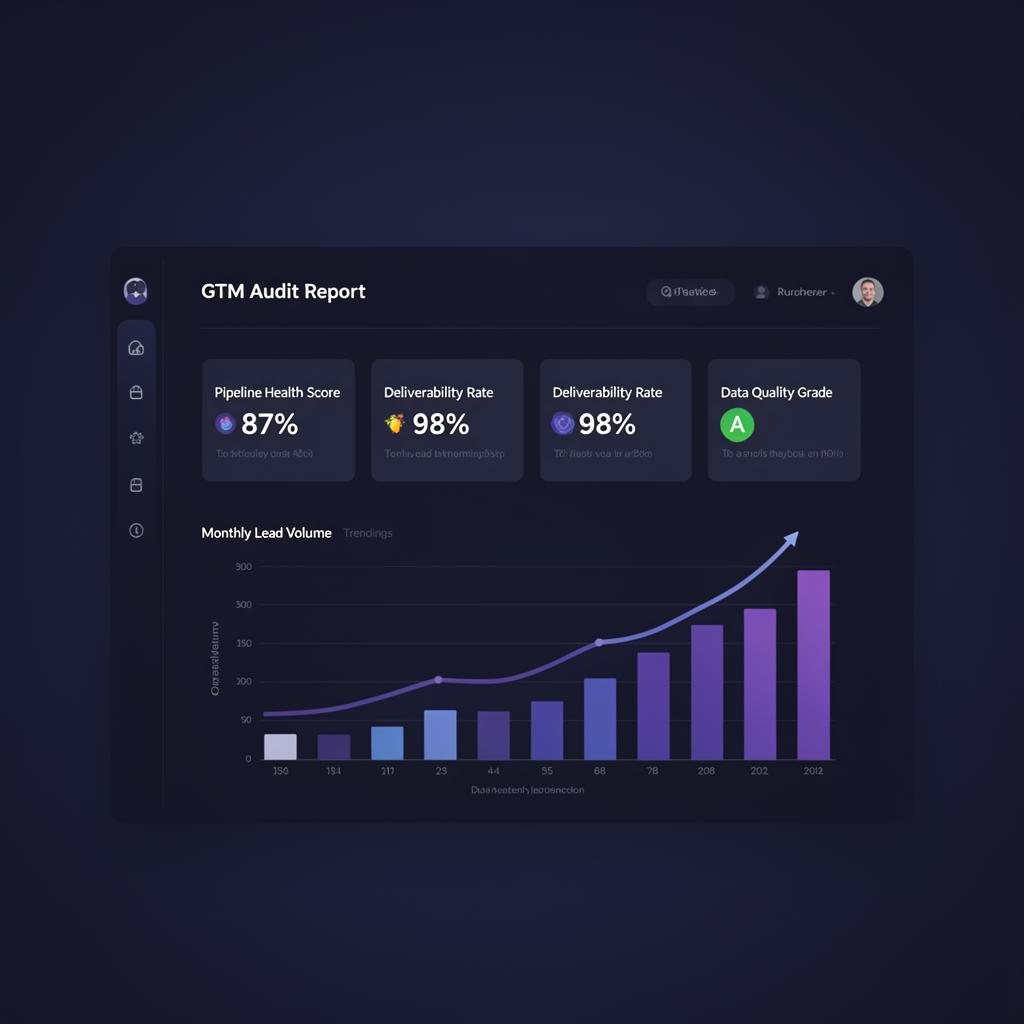
Automated data pipelines feeding 98% verified contacts
Reporting & Dashboards
Real-time visibility into pipeline health and conversion rates
2. The RevOps Maturity Matrix
Not every company needs the same model. The right approach depends entirely on your ARR stage and operational complexity.
Founder-Led Tools
Spreadsheets, basic CRM, manual processes. The founder IS the RevOps team.
Focus on closing, not infrastructure.
Scaling Tech SaaP + Fractional Architect
Deploy a standardized RevOps Stack—CRM logic, attribution models, and waterfall data enrichment—managed by a fractional architect.
The Sweet Spot. Maximum ROI per dollar spent.
Full-Time RevOps Department
Dedicated team managing multi-product complexity, large sales orgs (50+ reps), and daily operational fires.
The engine is built. Now hire mechanics.
3. Architect's Warning: The $300K CRO Trap
Why over-hiring is the most expensive mistake mid-market SaaS makes
The conventional CRO playbook — hire a senior leader at $250K-$350K fully loaded, allocate 6 months for ramp, and assume their network translates into pipeline — represents one of the highest-risk capital allocations a mid-market SaaS company makes. The failure mode is structural, not individual: executives hired to build "strategy" lack the technical infrastructure required to execute it.
The Real Cost of a $300K CRO Hire:
- • Base + Bonus: $250,000 - $350,000
- • Ramp Time: 4-6 months of near-zero output
- • Recruiting Cost: $50,000 - $75,000
- • Tools They Request: $30,000 - $60,000/year
- • Team They Want to Hire: 2-3 SDRs at $60k each
Year 1 Total Exposure: $450,000 - $700,000+
The dirty secret: Most CRO hires produce a strategy deck and a hiring plan — not a revenue engine. When they leave (average tenure: 18 months), the "strategy" walks out with them. The company is back to square one — with no systems, no automation, and no institutional knowledge baked into the infrastructure. For the full GTM execution blueprint behind these decisions, see the B2B SaaS GTM Framework.
🚩 $300K CRO Hire
- • Year 1 cost: $450K-$700K+
- • Time to pipeline: 4-6 months
- • Builds: Strategy deck + hiring plan
- • When they leave: Strategy walks out
- • Avg tenure: 18 months
✅ Fractional + Systems
- • Year 1 cost: $60K-$120K
- • Time to pipeline: 2-4 weeks
- • Builds: Automated outbound engine
- • When they leave: Systems keep running
- • Month-to-month flexibility
4. VP Sales vs. GTM Consultant: The Inflection Point
The inflection between $1M and $5M ARR presents a structural decision: the founder-led sales motion that generated initial traction cannot sustain the next phase of growth — yet hiring a VP to build a team before the selling motion is documented and systematized is the leading cause of failed sales executive hires in B2B SaaS.
The $1M-$5M ARR Danger Zone:
- • 70% of first VP of Sales hires fail within 18 months
- • Average cost of a failed hire: $500K+ (salary, lost deals, restart time)
- • Most common cause: hiring before having a documented playbook
- • Second most common: hiring enterprise VPs for startup selling
✅ Ready for a VP of Sales If:
- • 30-50+ closed deals with documented patterns
- • $2M-$3M+ ARR with proven ICP
- • Written playbook a new hire can follow
- • Budget for $200K+ OTE + first AE hires
- • Founder ready to step back from selling
🔧 Use a Fractional Consultant If:
- • Under $2M ARR without a documented playbook
- • Selling motion still trapped in founder's head
- • Need infrastructure before team-building
- • Want to de-risk the VP hire with proven systems
- • Need senior expertise at 1/3 the cost
Daniel's Note: The best approach: use a fractional consultant to build the playbook and infrastructure, then hire a VP to execute and scale what's already proven. This "Fractional Bridge" strategy reduces VP failure rates by 60%+.
5. Growth Agency vs. Fractional Architect
The distinction between strategic architecture and campaign execution determines whether investment produces lasting infrastructure or temporary outputs — a critical differentiation before comparing cost structures.
GTM Architect
- • Defines the "what" and "why"
- • Works as embedded leadership
- • Builds internal capabilities
- • Owns strategic outcomes
- • 15+ years executive experience
- • Systems persist after engagement
Growth Agency
- • Executes the "how"
- • Works as external vendor
- • Delivers campaign outputs
- • Owns activity metrics
- • Junior account managers
- • Campaigns stop when contract ends
A consultant asks "Should we be doing outbound at all?" An agency asks "How many emails do you want us to send?"
6. Advisory Partner vs. Fractional Operator — When You Need Each
"Fractional" gets used loosely. In practice it covers two different jobs with different costs, timelines, and deliverables. Picking the wrong one is how teams end up paying $40K/month for a strategy doc that nobody implements.
| Dimension | Advisory Partner | Fractional Operator |
|---|---|---|
| Primary job | Diagnose the gap, write the playbook | Ship the system end to end |
| Engagement length | 4–8 weeks | 12–26 weeks |
| Monthly cost | $15K–$40K | $5K–$15K |
| Deliverable | Strategy doc, scorecard, hiring plan | Live pipeline, automations, dashboards, CRM hygiene |
| Hours/week | 4–8 (strategy + reviews) | 10–20 (hands-in build + ops) |
| What persists after engagement | Recommendations and frameworks | Working revenue infrastructure |
| Use when | The question is "what should we do?" | The answer is "someone has to build it" |
The honest version: advisory work without a downstream operator is a $40K invoice for a Notion doc. Operator work without an upfront diagnosis is six months of building the wrong thing. The teams that compound revenue pair them — a 4–6 week diagnosis that hands directly to a 12–26 week build, ideally with the same person on the hook for both.
7. When to Hire vs. When to Build
The following decision tree maps the optimal GTM leadership model to operational maturity and ARR stage:
Do you have a documented playbook with 30+ closed deals?
No → Fractional Consultant to build it first
Yes → Continue to Question 2
Is your ARR above $2M with budget for $200K+ OTE?
No → Fractional SaaP ($60K-$120K/year) to build infrastructure
Yes → Continue to Question 3
Do you need strategy + infrastructure, or just execution bandwidth?
Strategy + Infra → Hire VP Sales + Fractional RevOps architect
Execution only → Growth Agency under strategic direction
Frequently Asked Questions
Common questions about this topic
Related Insights
The 2026 RevOps Tech Stack Guide
The definitive stack architecture from Series A to $10M ARR.
The Waterfall Enrichment Blueprint
The data engine behind high-growth outbound. 98% verification guaranteed.
The Founder-Led Sales Trap
Why staying in every deal kills growth — and how to escape.
Reducing SDR Headcount with AI
The technical architecture to replace SDR teams with AI-native systems.